
Aromas Without Borders
Cooking where Middle Eastern spice and Mediterranean sunshine share the same table.
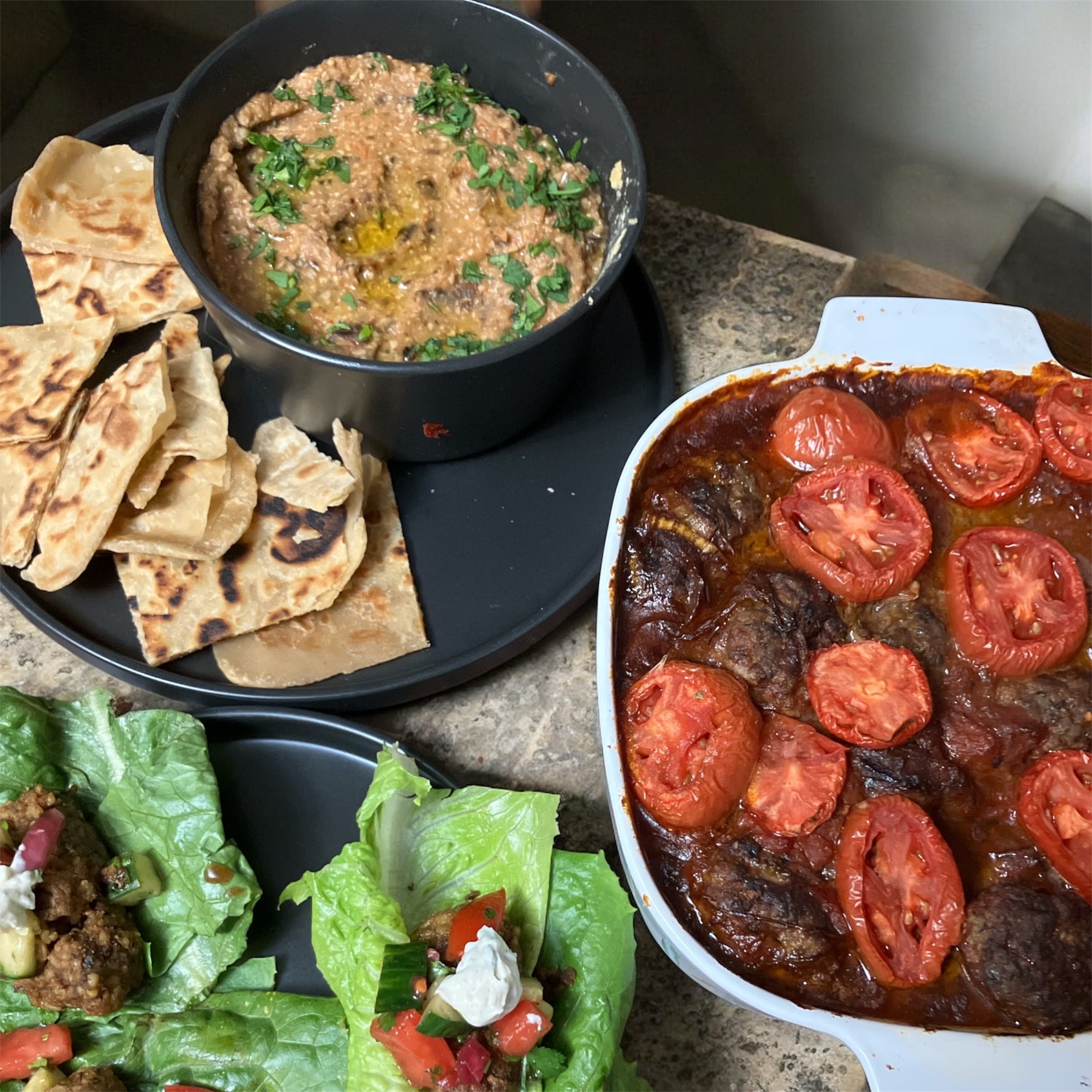
I call myself The Wanderlust Chef for a reason — my love of travel through food, culture, and origin stories keeps me chasing flavors across borders. I write about dreamed-of adventures that I know I’ll one day take, but for now, I travel with my skillet and my senses.
My vision always involves cuisines from every corner of the world, where sight, sound, and taste mingle to create warmth, excitement, and connection.
If you’ve ever had me cook for you, you already know: your weekly menu might take a trip from Morocco to Greece, or from Lebanon to India — because that’s how I eat and dream.
🫚 When the Craving Strikes
One ordinary weekday, I found myself craving something fragrant and bold — warm spices that felt mysterious yet familiar, paired with clean, herb-bright flavors. Immediately, my mind wandered to the Middle East and the Mediterranean.
To me, the two are like siblings who share a kitchen — familiar in ingredients and technique, yet distinct in personality. The line between them blurs deliciously.
🌊 Middle Eastern vs. Mediterranean: Where the Lines Blur
“The Middle East gives the food its heart; the Mediterranean gives it its soul.”
I often use Middle Eastern and Mediterranean in the same breath, because the line between them is more coastline than border.
The Middle East describes a culture rich with spices, hospitality, and shared plates.
The Mediterranean describes the geography — the sunlit lands that rim the sea.
In Lebanon, Palestine, Syria, Jordan, and Turkey, worlds overlap: olive oil with cumin, lemon with tahini, dishes like kefta or smoky eggplant salads merging both identities.
🍢 What I Cooked That Day
For this craving, I chose three dishes to blend tradition and flavor at my table:
Kefta bil Sayniyeh — spiced lamb baked with tomato and onion
Roasted Eggplant and Red Pepper Dip — smoky, sweet, and earthy
Red-Lentil Köfte (Mercimek Köftesi) — a hearty, irresistible vegetarian option
In keeping with my fusion mindset, I served that dip with Indian paratha.
My kitchen, once again, became a meeting ground for flavors without boundaries.
🌍 Dish Origins
Each of these recipes has traveled the world, just as I dream to do myself.
Their stories show how food carries memories and flavors across continents.
Kefta (also spelled kafta, köfte, kufteh, kofta) originated in ancient Persia and spread across continents, adapting to every culture it encountered.
The word itself means “pounded” or “ground.”
Today, you’ll find versions in Turkey, Greece, Morocco, India, and the Balkans.
Middle Eastern kofta tends to be aromatic and spice-forward, often grilled or baked; Mediterranean versions lean lighter — herb-filled, kissed with olive oil and tomato.
The particular dish I made, Kefta bil Sayniyeh, comes from the Palestine–Lebanon region. Arab-Levantine in technique, Mediterranean in geography — a perfect hybrid of both worlds.
My Roasted Eggplant and Red Pepper Dip sits in similar company: it could be Moroccan, Turkish, or Levantine, depending on who’s cooking it that day.
Its base — eggplant, pepper, olive oil, lemon, cumin — speaks fluent Mediterranean, while the smoke that gives it life is unmistakably Middle Eastern.
And the Red-Lentil Köfte (Mercimek Köftesi)? That dish is Turkish-Armenian in spirit — a modest, meatless meal made from pantry staples and shaped by hand.
Proof that comfort food knows no boundaries.
🥣 History in a Mixing Bowl
These dishes show that food’s journey outpaces any passport.
Each time a cook crosses a sea or a desert, they carry flavors — reshaped by new places, new people, and new homes.
No matter how far a dish wanders, it’s always made and shared with love, pride, and joy.
👩🏻🍳 My Style — Cooking Through Cultures
As a chef with a wide palate, I love blending ingredients, flavors, and techniques from one culture into another — sometimes guided by tradition, sometimes by what’s simply in my pantry.
That day, I followed my craving for heady spices and clean herbs, and ended up feeding both my wanderlust and my appetite.
Each dish carried me somewhere different: the warmth of Palestine, the smokiness of Morocco, the earthiness of Turkey.
Three plates, one kitchen, no passport required.
Recipes from My Global Kitchen
Each dish tells a story — here are the ones that filled my kitchen with scent and wanderlust.
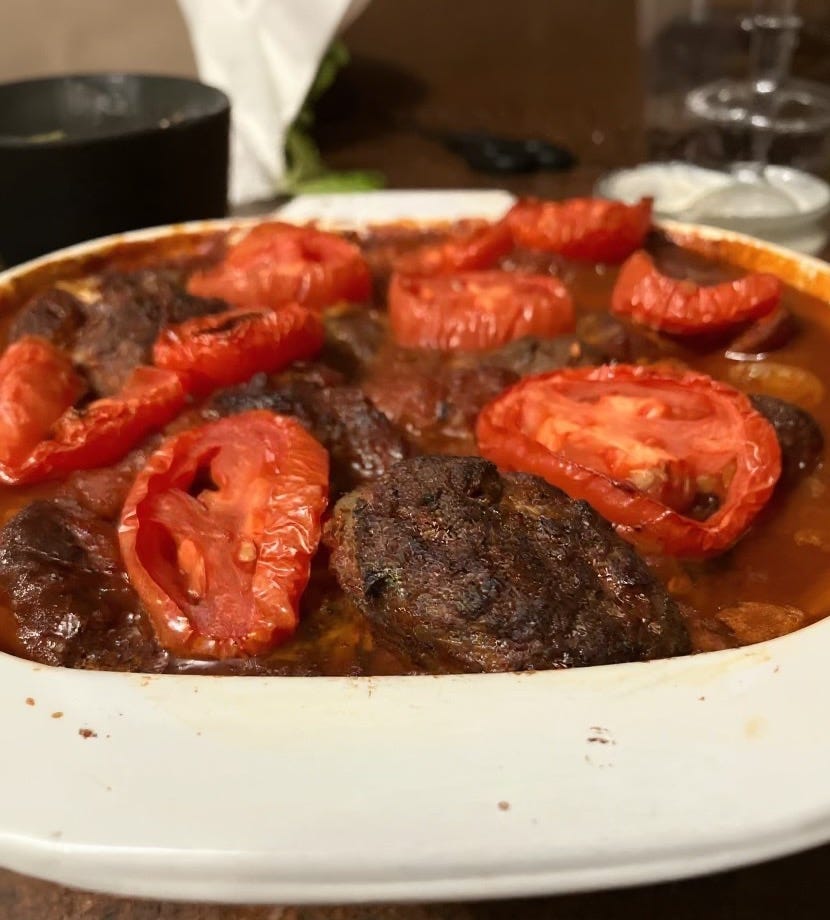
Kefta bil Sayniyeh (Spiced Lamb Patties with Tomato and Onion
This recipe is adapted from Saveur magazine.
1 lb. ground lamb
1 lb ground beef chuck
1⁄2 cup minced parsley
1⁄3 cup flour
2 tsp. dried mint
3 tsp. Lebanese seven-spice powder (or Ras el Hanout powder)
8 cloves garlic (5 minced, 3 thinly sliced)
1 1⁄2 large white onions, minced and divided
1 extra-large egg
Kosher salt, pinch of sugar, and freshly ground black pepper, to taste
1⁄4 cup extra virgin olive oil
1 tbsp. tomato paste
2 canned whole, peeled tomatoes, crushed by hand
2 stick cinnamon
2 vine-ripe tomatoes, cored and sliced 1⁄4” thick
Method
Mix lamb, parsley, flour, mint, 2 tsp. spice powder, the minced garlic, 2/3 of minced onion, egg, salt, and pepper in a bowl. Divide into twenty-seven 1 1⁄2-oz. balls, form into 2” logs. Heat 3 tbsp. oil in an ovenproof skillet over medium-high. Cook logs, turning as needed, until browned, 4–6 minutes, transfer to a plate.
Heat oven to 400°. Add remaining oil to skillet; cook sliced garlic and onion until golden, 4–6 minutes. Add remaining seven-spice powder or rash el hanout and the tomato paste; cook 2 minutes or until fragrant and tomato paste starts to darken in color. Add crushed tomatoes, cinnamon, salt, sugar, and pepper; cook until slightly thickened, 3–4 minutes. Stir in reserved lamb-beef logs; top with sliced tomatoes. Bake until tomatoes are slightly dry, 30–35 minutes.
Lentil Kofte (Mercimek Köftesi)
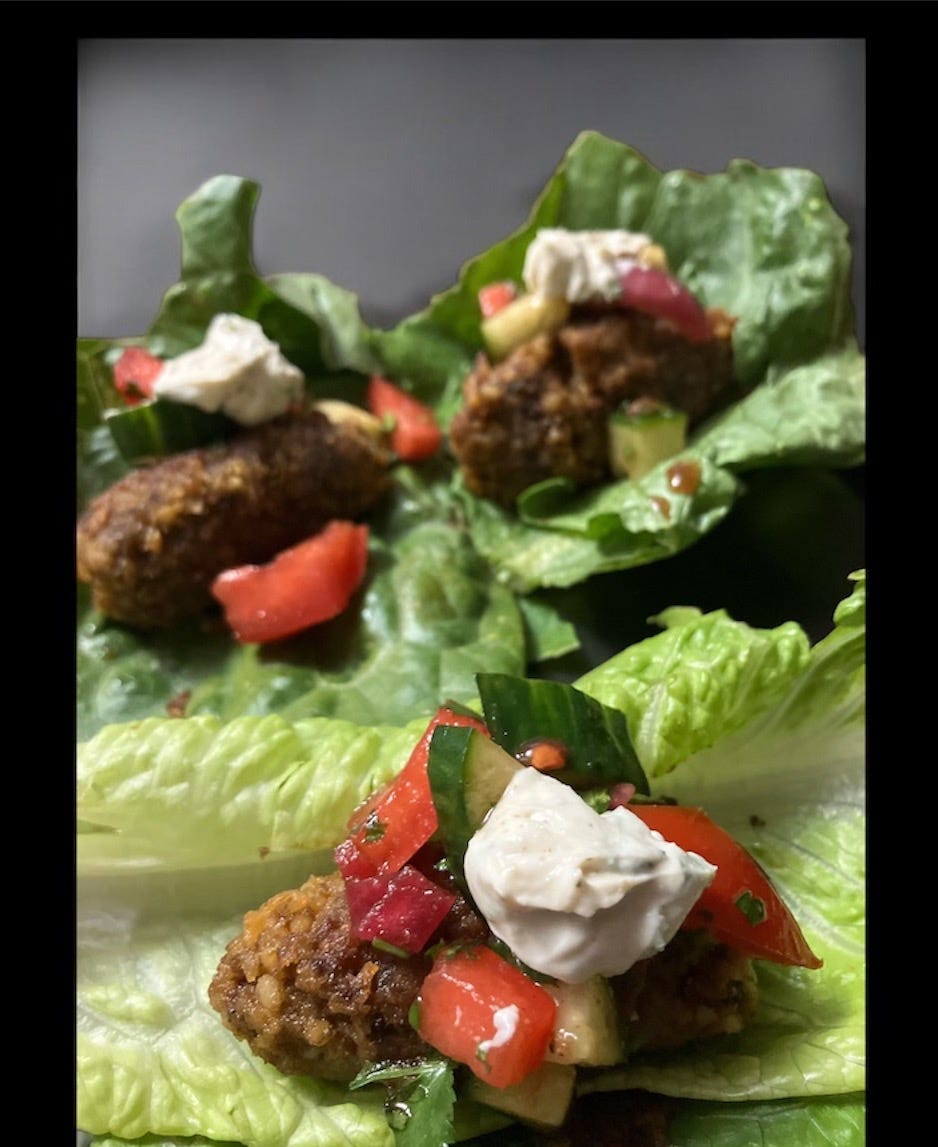
This is not your typical way of eating this dish. Lentil kofte is usually eaten as a mezze fresh and not fried. This is my take on it.
1 cup dried red lentils, rinsed and drained
3 cups water
3/4 cup medium-grind bulgur wheat
2 1/2 teaspoons kosher salt, divided
11/2 medium yellow onion, minced
3 tablespoons olive oil
2 tablespoons tomato paste
1 tablespoon pepper paste (biber salçası) or 1 additional tablespoon tomato paste or harissa paste
1 tablespoon ground cumin
1 teaspoon Aleppo pepper flakes (optional)
3 scallions, finely sliced
1 cup finely chopped fresh flat-leaf parsley leaves
½ cup all-purpose flour for dusting
Vegetable oil for frying
Salad
1 small red onion, finely chopped
1 English cucumber, halved, seeded, and finely diced
1 small green bell pepper, minced
4 plum tomatoes, seeded and cut into ½ inch dice
6 tablespoon extra-virgin olive oil
2 tablespoon lemon juice
1 teaspoon sugar
2 tablespoon pomegranate molasses
Salt and pepper to taste
1/3 cup minced flat leaf parsley
Romaine lettuce leaves, torn into large pieces
Yogurt Sauce
½ cup Greek yogurt
1 tablespoon lemon juice
1 teaspoon lemon zest
Salt and pepper to taste
Method
In a medium saucepan, add red lentils, 3 cups water and 1 teaspoon kosher salt. Bring to boil over high heat, then reduce to medium heat and simmer, with lid ajar, until lentils are fully cooked, slightly broken, and mushy, 20 to 25 minutes.
Meanwhile, in a large skillet, heat oil over medium heat until shimmering. Cook onion and 1 teaspoon kosher salt, stirring occasionally, until softened and just beginning to brown, 7 to 10 minutes. Add tomato paste, pepper paste (if using), cumin, and Aleppo pepper (if using), and stir until well-combined and fragrant, about 30 seconds; set aside.
Once lentils are cooked, remove pan from heat and add bulgur; stir to combine. Cover and let lentil-bulgur mixture sit until bulgur is tender and cooked through and water is absorbed, 20 to 25 minutes. If bulgur is undercooked after water has absorbed, add 1/4 cup warm water, stir to combine, and let sit until water is fully absorbed and bulgur is tender, 10 more minutes. Fluff lentil-bulgur mixture with a fork or spatula.
Add lentil-bulgur mixture to a large bowl, add cooked onion mixture, and stir until well combined. Let cool in bowl until just warm to the touch, 20 to 30 minutes.
When mixture is cool enough to handle, stir in parsley, scallions, and remaining 1/2 teaspoon of salt, pepper, and sugar to taste. Combine ingredients with spoon or your hands until well incorporated.
Shape: Dampen your hands and take a large walnut-sized piece of the mixture and squeeze it gently in your hand like you’re making a loose fist. You want to shape them into rough-looking ovals.
Put 1/2 cup of flour in a plate. Dredge the oval logs in the flour, shake off any excess, and set on a floured baking sheet. In a large skillet, heat 1/4 inch of vegetable oil until shimmering. Working in batches, fry the logs over moderately high heat, turning once, until golden, about 3-5 minutes. Drain on paper towels. Add more oil to the skillet as necessary.
Salad
In a large bowl, toss the red onion with the cucumber, bell pepper, and tomatoes. In a small bowl, whisk the olive oil with the lemon juice and pomegranate molasses. Pour all but 2 tablespoons of the dressing over the salad, season with salt and pepper, and toss. Stir in 2 tablespoons of the parsley.
Yogurt Sauce
Place all ingredients in a medium bowl and stir until combined.
To Serve: Place one fried kofta log on top of crispy lettuce leaves, add a tablespoon of salad and drizzle with yogurt sauce.
Roasted Eggplant and Red Pepper Dip
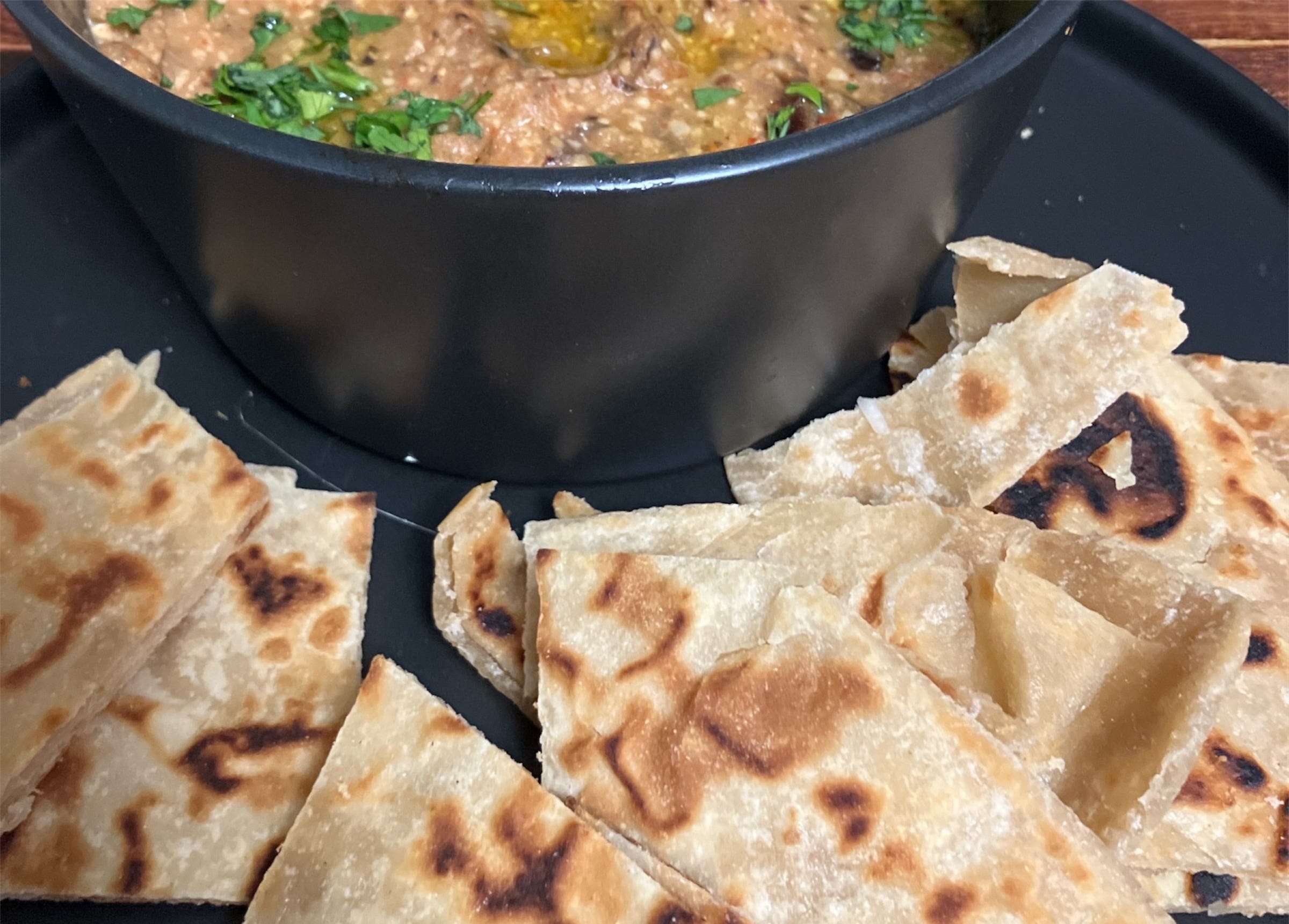
Adapted from Serious Eats to my taste and version
2 globe eggplants; halved lengthwise
1 1/2 red bell pepper stemmed, cored, and quartered
2 shallots
2 jalapeño, stemmed and halved lengthwise
1 teaspoon cumin seeds
1 teaspoon coriander seeds
1/3 cup extra-virgin olive oil, divided
kosher salt
Pinch of sugar
1/2 cup red lentils, rinsed
1/2 cup whole roasted and salted cashews
4 garlic cloves
1/4 cup fresh lemon or lime juice
2 tablespoons finely chopped flat-leaf parsley, roughly chopped
2 tablespoon cilantro leaves and tender stems, roughly chopped
Method
Adjust oven rack to middle position and preheat the oven to 425°F. On a rimmed baking sheet sprayed with cooking spray, spread eggplant, bell pepper, shallots, and jalapeño in an even layer. Sprinkle cumin and coriander seeds on top, season lightly with salt, pinch of sugar, and drizzle with 2-3 tablespoons olive oil. Using your hands, toss to coat vegetables well, then cook until lightly charred, about 35-45 minutes. Let cool completely. Transfer vegetables to a medium bowl.
Meanwhile, combine lentils with 2 cups water and 1/4 teaspoon salt in a small saucepan. Bring to a boil over medium-high heat. Lower the heat to maintain a simmer and cook until lentils are completely tender but not falling apart, about 15 minutes. Drain lentils through a fine-mesh strainer, discarding the cooking water, and let cool to room temperature.
Meanwhile, place cashews in a small microwavable bowl cover by at least 2 inches of boiling water, and heat for 2 minutes or until water comes to a boil. Let soak for 30 minutes. Drain cashews through a fine-mesh strainer, discarding the soaking water, and add to the bowl of a food processor fitted with a metal blade.
Add roasted vegetables, lentils, garlic, and lemon or lime juice to the food processor bowl. Pulse until a coarse paste forms, 2 to 3 5-second pulses. Season with salt and pepper to taste. Transfer to a serving bowl, garnish with parsley and cilantro, drizzle remaining oil on top, and serve with warm crackers, flatbread, or as I did with toasted Indian naan or paratha.
🌏 Borderless Cooking Through Culture
Food is a language we all speak. As we travel through it, a recipe naturally adapts to the land, the people, and the cook who brings it to life. My kitchen may be in North Carolina, but when I cook, it expands to include the whole map.
I’ll keep dreaming of tasting these dishes where they were born.
Until then, I’ll keep making them here — pulling up a chair, sharing the table, and exploring the world one meal at a time.
Do you ever dream of tasting the world from your own kitchen?
I’d love to hear which dishes have taken you traveling — share your story in the comments below. Let’s keep cooking without borders.