
Easter Around the World: Different Tables, Same Meaning
How Easter is celebrated through food, tradition, and kitchens across cultures
Some of my earliest holiday memories are shaped by scent: the warm smell of bread rising in my grandmother’s kitchen or the sweet burst of citrus when someone sliced candied orange peel for a special cake. That mix of spices and fresh dough always signaled the real start of the holiday.
You can tell a lot about people by their holiday food. I don’t mean restaurant fare or quick weeknight meals, but true holiday dishes. These often take hours and are learned by hand, not from a cookbook. They appear once a year, shared by scent and tradition rather than recipe.
Easter is celebrated in many ways around the world, with different languages, churches, and traditions. Still, it always centers on renewal, hope, and sharing a meal after a long season. I’m interested not just in what’s on the Easter table, but why it’s there. Every dish, from eggs to lamb to braided breads, carries a deeper meaning and tells stories of history, survival, and the return of the sun after winter.
Italy: Where Easter Lunch Lasts All Day
In Italy, Easter’s heart is at the table, not just in church. The day’s highlight is a long, lively lunch. Preparations start days ahead: dough rises, lamb marinates, salami is sliced, sauces are tasted, and bread is judged by all. Italian kitchens bustle with warm family activity.
A classic dessert is Colomba di Pasqua, or the “Easter dove.” It is the Italian answer to the hot cross bun but crafted in a much more artistic style. These enriched yeasted cakes are sculpted into the shape of a dove before baking, symbolizing the dove that brought an olive branch to Noah. The dough is often studded with high-quality candied orange peel and topped with a crisp pearl sugar and almond glaze, providing a sophisticated crunch that yields to a pillowy, buttery center.
Lamb is the main dish, roasted with olive oil, rosemary, and garlic, and is the meal’s centerpiece. Lambs have long symbolized sacrifice, renewal, and spring. Many Italian families cherish a small ritual that makes Easter special. Just before lunch, everyone gathers in the kitchen to break off a piece of Colomba and share it, wishing each other peace and good luck for the year. It’s a gentle moment, full of laughter and togetherness, before the meal begins.
The day’s pace is slow: church in the morning, lunch that lasts all afternoon, and espresso with long talks until sunset. No one eats alone or hurries. Easter feels like a day when time slows down so everyone can really connect.
Greece: Midnight Light and Sunday Lamb

In Greece, Easter is the year’s most important holiday. The celebration starts late Saturday: people gather at the church with candles. At the resurrection, one flame is passed until the church glows. Families bring the flame home and mark a cross above their doors. Only then, after a long fast, do they eat magiritsa, a soup bright with lemon and herbs.
The real feast in Greece is on Sunday, usually outdoors. Lambs roast slowly on spits while families talk, drink wine, and watch the fire. There’s also tsoureki, a Greek Easter staple: an egg-enriched braided bread. For chefs, tsoureki’s magic is in its seasoning, spiced with two aromatic resins: mastic, which adds a piney note, and mahlab, a spice from St. Lucie cherry pits that gives a deep, almond-like fragrance. Sometimes cardamom is added. The resulting loaf is moist, chewy, and undeniably Mediterranean. Baked right into the strands are red eggs, the main symbol of new life, whose deep red color reminds people of sacrifice.
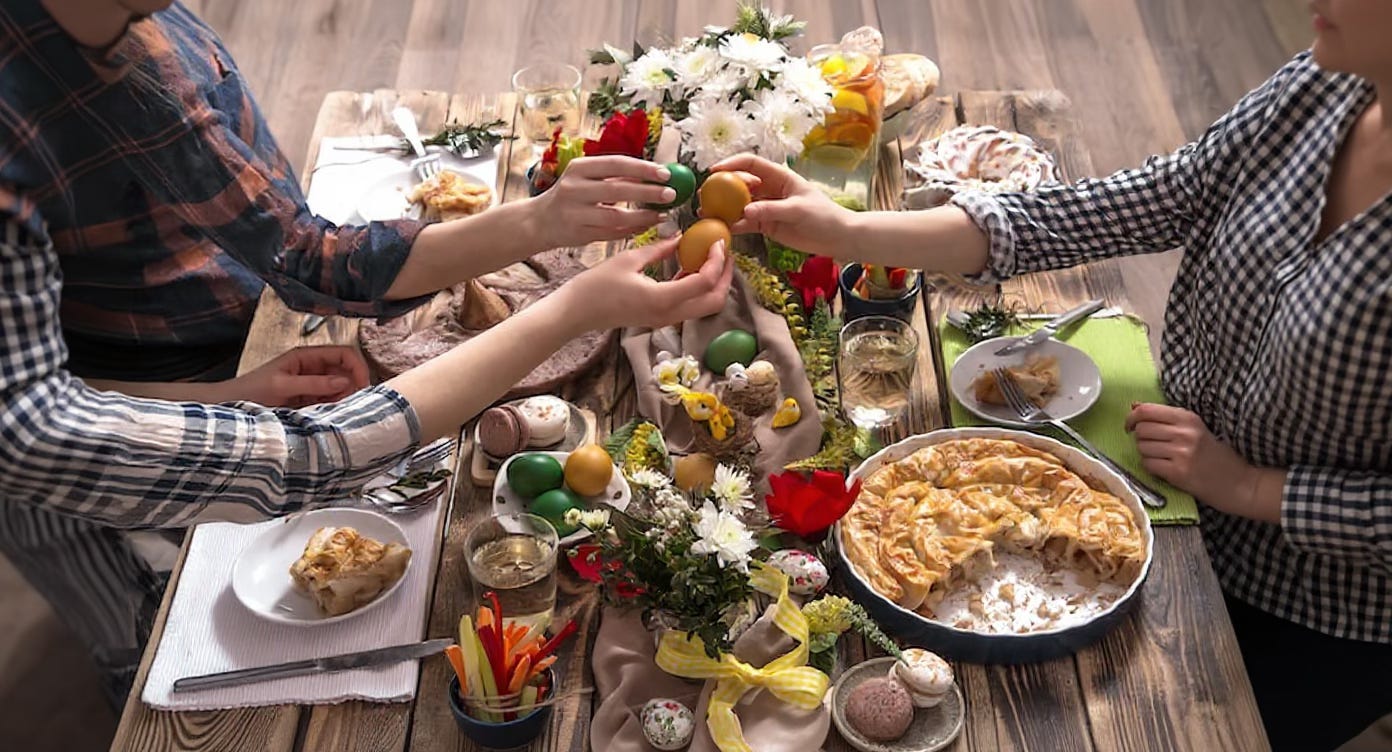
A fun tradition brings everyone together: people play tsougrisma, cracking eggs against each other to see whose egg stays whole. The winner is said to have good luck for the year. This game is full of laughter and friendly competition, adding joy to the meal. It fits the season, as Easter comes in spring when everything feels alive again.
Mexico: Food That Tells a Story
In Mexico, Easter is part of Semana Santa, when incense and processions fill the air. During Lent, cooks use fish, beans, and vegetables when avoiding meat. One traditional dish is capirotada, a bread pudding balancing sweet, salty, and savory elements. It uses toasted bolillo, aged cheese, raisins, peanuts, cinnamon, and piloncillo syrup, a dark, earthy syrup from unrefined cane sugar. Capirotada is special because its ingredients tell the story of the holiday.
Many families say the bread represents the body of Christ, the syrup the blood, cinnamon sticks the cross and cloves the nails. This dessert is more than just a sweet ending; it’s a story you can taste.
At Easter, a Mexican kitchen is warm, filled with the smell of cinnamon and syrup, mingled with the scent of toasting bread and bubbling cheese. You will see abuela’s hands covered in cinnamon and sugar, sprinkling raisins on top, and humming as she works. The kitchen is busy with tortillas on the griddle and family coming and going.
Ethiopia: The End of the Fast
In Ethiopia, Easter, called Fasika, follows a 55-day fast without meat or dairy. This observance unites families and communities in shared discipline. When the holiday arrives, the meal represents more than just food, it’s an expression of cultural tradition and community bonds.
After long church services, families return home for a joyful feast together. Doro Wat, a rich, spicy chicken stew, is the main dish and a central part of Ethiopian holiday celebrations, symbolizing hospitality and tradition. It’s among Ethiopia’s most famous stews, slow-cooked for hours to develop deep complexity with berbere, a fiery blend of chili peppers, garlic, ginger, and basil. It is served with injera, the sour, fermented flatbread made from teff, which is used as both plate and utensil, highlighting the communal nature of Ethiopian dining.
Food is shared from a communal platter, reinforcing values of togetherness. Gursha, feeding someone by hand, shows respect and affection, emphasizing close social bonds. The meal ends with a coffee ceremony, where beans are roasted and brewed before guests, serving as a cultural ritual that brings people together. This slow process fits the holiday’s spirit, no one is in a hurry; the focus is on being together.
Bringing It Back Home: An Eclectic Easter

Easter in America may look different from Greece’s midnight service or Ethiopia’s coffee ritual, but the roots are similar. For me, Easter means family togetherness. While religious, I most enjoy being with loved ones. The day stands for hope and renewal, a time to reflect and welcome spring.
Easter wasn’t part of my childhood; I chose to celebrate it later with my family, so our table mixes traditions. As I started my own family, I was drawn to Easter for its renewal and togetherness. The chance to slow down, enjoy time, and create special traditions inspired me to include it. Starting our own Easter lets us blend old and new customs and make the holiday our own. We serve roast lamb or ham, potato gratin, rosemary green beans, and ethnic dishes. The meal is both traditional and personal, reflecting my journey.
When I’m in the Deep South with relatives, Easter becomes a social event. The day begins with church and turns into a potluck feast. The table holds ham, fried chicken, casseroles, beans, potatoes, salads, and desserts: pies, trifles, cakes, cookies. Adults talk while kids hunt eggs on the lawn, baskets ready for treats. The day is all love, fun, and family laughter.
One Holiday, Many Tables
What I love about Easter is seeing people celebrate with their own foods and traditions. We sit at different tables, but share the same rituals: cooking special meals, focusing on loved ones, talking, eating, remembering, and celebrating together.
Maybe that’s what holidays are for, anywhere. They aren’t just religious or traditional. They give us a reason to slow down, cook carefully, and gather loved ones. Our foods differ, but the meaning remains the same. It always comes back to the table.
Food traditions don’t really live in history books; they live in kitchens. They live in the dishes people cook once a year, the breads that rise overnight, and the meals that bring everyone back to the table. If this article sparked your curiosity about how Easter is celebrated through food around the world, then the next part moves into the kitchen, what people cook, what appears on Easter tables in different countries, and what a global Easter menu might look like on your own dinner table.
Keep reading with a 7-day free trial
Subscribe to The Wanderlust Chef to keep reading this post and get 7 days of free access to the full post archives.