
Nobody Eats Alone in Spain
On the land, the people, the slow burn of history — and why every dish on the table has a grandmother behind it.
By The Wanderlust Chef · May 2026.
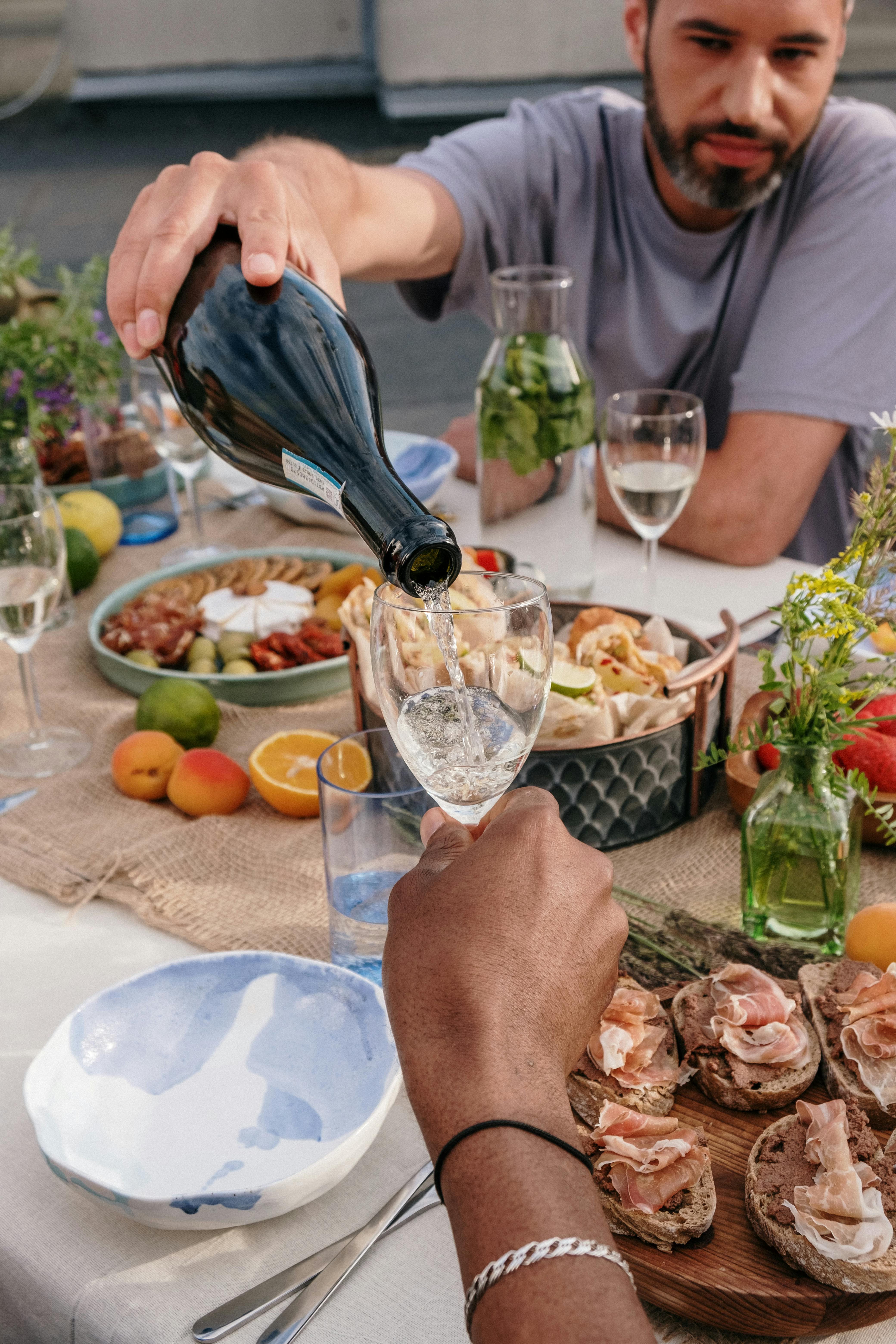
My mother never told me she was making a Spanish dessert. She just made flan. Smooth, trembling, impossibly creamy — the kind that coats your mouth like a warm hand on your shoulder. I had no idea where it came from. It simply existed in our kitchen the way certain things do in childhood: without explanation, without origin, entirely taken for granted. It was not until years later, deep into my cooking life, that I traced it back. The flan came from Spain. And with it came the beginning of a much longer conversation.
Spain was not part of my world growing up in Malaysia. It was a country I knew through images: flamenco dancers burning with color and fury, matadors moving with a terrifying elegance I could not quite look away from. The bull runs. The festivals. Passionate and beautiful and slightly dangerous, which I suppose is true of the best things. But the food barely reached me. I came to it the way you sometimes come to the things that matter most: not early, but when you were finally ready.
What surprised me, when I eventually arrived through its cooking, was how much of the spirit I already recognized. Meals that stretch for hours. Plates that arrive in the center of the table and belong to everyone. The quiet understanding that eating together is not something you fit around your day — it is the day. I grew up with that in Malaysia. Spain confirmed it, on the other side of the world, in a completely different language.
THE LAND
A Country That Cannot Be One Thing
If you want to understand Spain, start with the physical map. The mountains, the coastlines, the vast sunbaked interior, the green and rain-soaked north. Spain is not one landscape. It is five or six pressed up against each other, and each one has shaped a different way of eating, a different relationship between people and the food they grow.
The Meseta, the great central plateau, is windswept and ancient and hard. The people who have lived here for centuries learned to eat what kept: dried legumes, cured pork, bread. Cocido madrileño, the slow-cooked chickpea stew that is Madrid’s Sunday soul food, is a dish born of necessity and patience. You put everything in the pot — meat, bones, vegetables, whatever the week had left — and let time do the rest. It arrives at the table in stages: broth first as soup, then the chickpeas and vegetables, then the meat. A meal that teaches you, almost without trying, to slow down.
Go north and everything changes. Galicia, tucked into Spain’s wet green northwest corner, surprises people who picture Spain as golden and dry. Fishing villages here have been sending boats out for centuries: for octopus, for barnacles, for salt cod that traveled as far as the Caribbean before refrigeration existed. Pulpo a la gallega — octopus boiled until tender, sliced thin, dressed with olive oil, smoked paprika, and coarse salt on a wooden board — is one of the most honest dishes in the country. No performance. Just a creature from the sea, treated with complete respect.
“Spain is not a cuisine. It is seventeen cuisines in conversation — sometimes agreeing, more often arguing, always eating.”
Then go south and the sun takes over. Andalusia is white villages on hillsides, orange blossom in the air, olive groves running to the horizon. It is also the birthplace of gazpacho— that cold soup whose name always made me think of a cowboy ordering something at a saloon. Cold soup did not excite me. Then I tried it on a genuinely hot day, when my body needed something, it could not quite name, and I finally understood. Gazpacho is not a recipe. It is a farmer’s answer to August. Tomatoes, peppers, cucumber, garlic, stale bread, good olive oil, cold water — blended, chilled, poured. Common sense made delicious.
A PORTRAIT
María, and the Pot She Never Measures From
HUMAN PORTRAIT · ANDALUSIA
María Jesús Romero
Sevilla, Andalusia · Home cook, matriarch, keeper of the recipe that was never written down
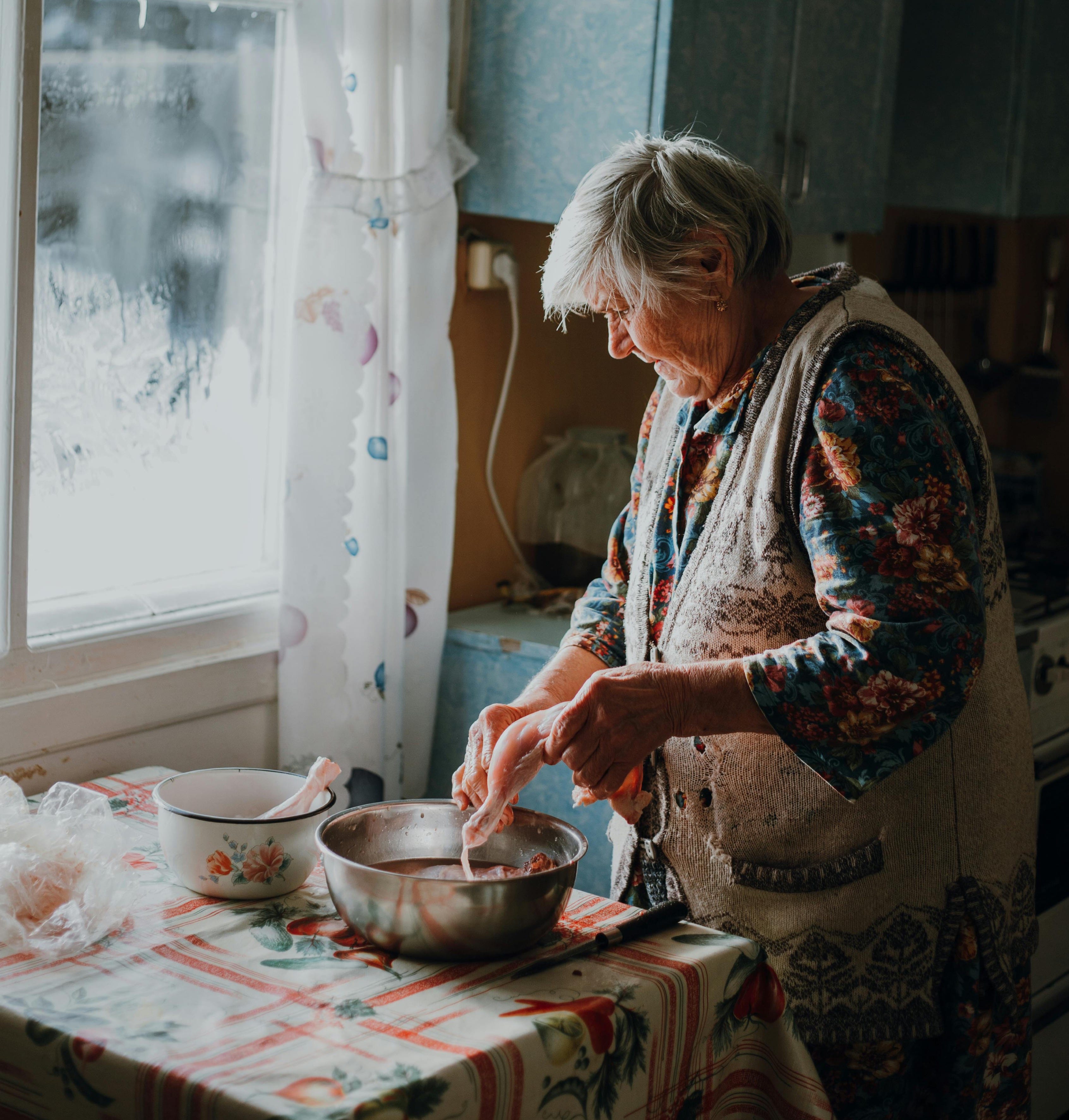
In a third-floor apartment in the Triana neighborhood of Sevilla, there is a kitchen that smells of sofrito from ten in the morning. María Jesús, known as Maje to everyone who loves her, has been cooking in this kitchen for forty years. She learned from her mother, who learned from hers, in a village in the Sierra Norte where the garden was the only supermarket that mattered.
Maje makes gazpacho the way her mother made it: by hand, in a clay bowl, with a pestle. No blender. The tomatoes come from a man at the market whose family has grown them in the same Huelva soil for three generations. She peels them herself. The garlic goes in — just enough, she says, which means she knows exactly how much but is not going to tell you. The bread is two days old. The olive oil comes from her cousin’s farm in Jaén, pressed from trees that have been standing longer than anyone alive can remember.
When you ask for the recipe, she laughs. Not unkindly. She told her own daughter the same thing she will tell you: come and watch. You cannot write down what your hands already know. The measurements live in the color, in the smell, in whether it feels right when you taste it.
She serves it cold, in small clay cups, before lunch. The family arrives around two. By three, everyone is still at the table. By four, someone has opened another bottle. By five, nobody is in any hurry to be anywhere else. This is not an accident. This is just a Tuesday.
A CHEF’S THOUGHT
What strikes me about Maje’s kitchen is something I recognize completely. I did not learn to cook in a culinary school. I learned in my mother’s kitchen, watching her hands, trying to absorb what she never wrote down. My aunts cooked the same way. Ask them how much tamarind. They will show you, their palm. That unmeasured knowledge is the first thing that disappears when a food culture starts to fade, and the hardest thing to get back.
THE RITUAL
The Tapa Is Not a Snack. It Is a Philosophy.
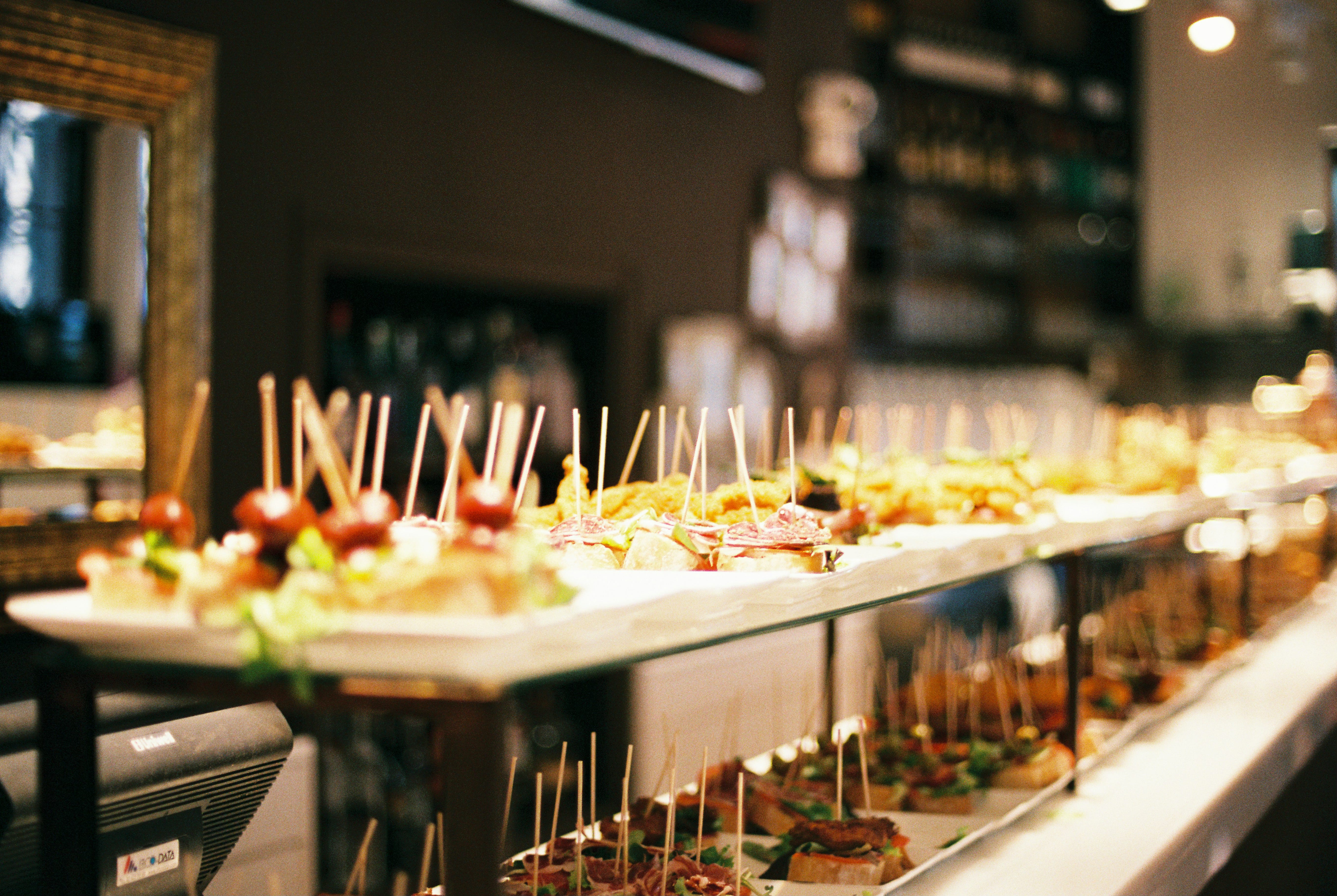
Sometime around seven in the evening, something shifts in Spain. Offices empty. Streets fill back up. Bars open their counters and set out the first plates. An entire society steps sideways out of the workday and into something older and more important: the hour of the tapa.
Nobody agrees on where it came from. One story has a king ordering his wine covered with a slice of bread to keep the flies out — tapa means lid. Another says Andalusian taverns started offering small bites with drinks, so people ate while they drank. The real history is probably messier than either version. But the thing itself — small plates, something cold to drink, a bar counter, whoever happens to be standing next to you — that is unchanged and unchanging.
What the tapa is really about is pace. You move from bar to bar. One place for the jamón. Another for tortilla española, that golden yielding potato-and-egg wonder that sounds simple and takes years to get right. Another for the anchovies, silver and sharp, draped across bread like something precious. You never formally commit to one place, one dish, one bill. The evening stays open. That is the whole point.
In San Sebastián, the tapa becomes the pintxo, and the bar counter becomes a gallery. Every surface is covered in small constructions: a prawn on a crostini, a skewer of anchovy and olive and pepper, a tiny pastry shell filled with salt cod cream. People graze, move, argue cheerfully about which bar has the best version of something. Playful, competitive, and deeply communal all at once. Anyone who has been there will tell you it is one of the great food experiences on earth. I believe them entirely.
A CHEF’S THOUGHT
I borrowed the tapas concept for my catering long before I understood the culture behind it. Long events, four or five hours of service, work on exactly this logic: small bites rotating through flavors and textures, each one precise, each one leaving the palate wanting the next. You are managing desire as much as hunger. Spain understood this instinctively. I came to it through my own kitchen and realized, much later, that Spain had been there first.
THE INGREDIENTS BENEATH THE INGREDIENTS
Olive Oil, Saffron, and Eight Hundred Years of History
Spanish food tastes the way it does for reasons that go deeper than the recipe. The Moors, Muslim rulers who governed much of the Iberian Peninsula for nearly eight centuries, left a culinary inheritance that Spain never fully named but never stopped drawing from. Saffron, almonds, citrus, the art of pairing sweet with savory, spice used as structure rather than novelty: all of this arrived with Al-Andalus. When you eat chicken slow-cooked with almonds and orange in Córdoba today, you are tasting a thousand years of history in a single bite, whether you know it or not.
The Romans planted olive trees across the peninsula before the Moors arrived, and Spain is now the world’s largest producer of olive oil. But the number tells you nothing about what olive oil means in a Spanish kitchen. It is not a garnish. It is the beginning of everything. The sofrito, that slow-cooked base of onion, tomato, and garlic that underlies so many Spanish dishes, is only as good as the oil you build it in. Spanish cooks pour it generously and without apology because in this kitchen, olive oil is not a luxury. It is the language all other ingredients speak through.
And then there is jamón ibérico: the cured leg of the black-footed Iberian pig, an animal that roams the ancient oak forests of Extremadura and Andalusia eating acorns until it reaches a richness nothing else can replicate. A leg hangs for three, sometimes four years before anyone cuts into it. The slices are translucent, marbled, served at room temperature so the fat melts before it reaches the back of your mouth. You do not cook it. You do not add anything. You simply eat it and pay attention. It belongs in a very short list of things I have eaten that I will never forget.
“The Moors left Spain eight centuries ago. Their saffron, their almonds, their way with spice — still in every pot.”
THE CHEFS WHO CHANGED EVERYTHING
When Spain Rewrote the Rules and the World Followed
In the late 1990s, Ferran Adrià was doing something at elBulli, his restaurant on the Costa Brava, that nobody had seen before. Open only half the year and nearly impossible to get a reservation at, elBulli quietly dismantled every assumption about what a dish was allowed to be. Foams built from pure flavor. Spheres that burst on the tongue. Food that was playful and rigorous and delicious, often all at once. Adrià was not just cooking. He was asking questions: what is this ingredient, really? What form does it actually want to take?
Before Adrià, there was Juan Mari Arzak in San Sebastián, who spent decades insisting that Basque food deserved to stand alongside French cuisine as a serious tradition. His daughter Elena now runs the restaurant with him. Together they represent something rare: a kitchen that is deeply rooted and always restless. Knowing where you come from while refusing to stay there. That is very Spanish, when you think about it.
The world noticed. The small-plates movement that swept through restaurants globally, the sharing menus, the counter dining, the parade of beautiful bites, that is tapas culture translated. Roy Choi in Los Angeles, Yotam Ottolenghi in London, David Chang in New York all absorbed the Spanish lesson that a meal does not have to be a single commitment. It can be a conversation. It can surprise you twelve times in one sitting.
Spanish technique is now in the DNA of kitchens everywhere. Romesco, the Catalan sauce of roasted peppers, tomatoes, almonds, and garlic, appears on menus from Melbourne to Montreal, often without anyone noting where it came from. Pimentón has become a pantry staple for cooks who have never set foot in Spain. Spain planted seeds all over the world and let other people’s kitchens grow them. I find that generous. I find it very Spanish.
A CHEF’S THOUGHT
My own version: romesco spooned beneath a whole steamed fish — a preparation that is entirely Southeast Asian — works because both traditions understand bold, direct flavor. My fried calamari arrive with sweet chili sauce and flash-fried basil alongside the lemon. The Spanish technique is there. The Asian instinct is there too. When you understand a cuisine deeply enough, you know which rules are structural and which are merely convention. You can break convention. You cannot break structure. Spain was one of the teachers that taught me the difference.
CLOSING
The Table That Was Already There
I have not yet stood in a market in San Sebastián or watched a paella cook over orange wood on a Sunday morning in Valencia. That trip is still ahead of me. But food travels to you before you travel to it. It comes through a mother’s kitchen, through a dish you learn to make without knowing its postcode, through a technique you borrow and slowly make your own. Spain has been running through my cooking for years in ways that were not always visible and not always intentional. That is what happens when an influence gets deep enough. It stops being a reference and becomes part of how you think.
What Spain taught me, slowly and through its food, is something worth reminding ourselves of. Eating is not maintenance. It is meaning. The gazpacho Maje makes without measuring is a love letter to her mother. The pintxos lined up along the bar in San Sebastián are a conversation between neighbors that has been happening every evening for generations. The jamón that hung for three years before anyone ate it is an act of faith — someone committed to a future meal for people they may not even know yet. Every dish in Spain has a person behind it. A season. A piece of land. A grief or a celebration it was made for.
My mother’s flan had all of that too. She just did not know she was cooking Spain. She was cooking love; in the only language she had. And somehow, without a map, she found the same table that Maje sets every Tuesday in Triana.
That is what food does, when you let it. It finds the table that was already there. All you have to do is sit down.
Return to The Table.
If any of this has made you want to find that table — the one where lunch starts at two and nobody checks the time — here is where I would start looking. Consider this the part of the conversation where I lean across and tell you what I actually know.
Keep reading with a 7-day free trial
Subscribe to The Wanderlust Chef to keep reading this post and get 7 days of free access to the full post archives.