
We Eat To Live
A Chinese New Year Story of Family, Food, and Fifteen Days of Meaning

Each year, Lunar New Year started well before the first firework lit up the sky. In my childhood home, it began with my mother’s determined spirit.
Weeks, sometimes a full month out, the transformation started. Curtains came down. Cupboards were emptied. Floors were scrubbed until they shone like mirrors. To a child, it looked like chores; to my mother, it was a sacred act of sweeping out the old. It wasn’t just spring cleaning. It was symbolic. We were physically clearing a path for luck, prosperity, and the fresh start we all hoped for.
I didn’t realize for years that she was taking part in a tradition thousands of years old. This cleaning ritual, called “sweeping the dust” in many Chinese homes, holds deep meaning. It represents clearing away last year’s misfortunes and making room for new luck and prosperity.
Chinese New Year, also called Spring Festival, follows the traditional lunisolar calendar. It starts on the second new moon after the winter solstice, so the date changes each year. The holiday usually falls between January 22 and February 20. In 2026, it begins on February 17, but the real excitement starts the night before, on New Year’s Eve.
The festival’s origins go back more than three thousand years to the Shang Dynasty. It began as an agricultural prayer to mark winter’s end and welcome spring. People honored their ancestors for making it through winter and prayed for abundance in the year ahead. This tradition eventually led to the legend of Nian.
Nian was a beast that appeared every New Year to frighten villages. People discovered he was afraid of loud noises, fire, and the color red. That’s why streets are decorated in red, firecrackers explode at midnight, and lion and dragon dances fill our neighborhoods. These traditions help chase away bad luck.
Over hundreds of years, the festival evolved. It became a time for reunion, prosperity, and community. At its heart, it’s about coming together. For us, gathering always includes food.
Because Food Is Never Just Food
In a Chinese home, food is how we express unity, tradition, and respect. Sometimes, even the way a food’s name sounds is a wish for good fortune.
At home, preparing New Year dishes took days of work. But the Reunion Dinner on New Year’s Eve was the meal I looked forward to most. No matter where you were, you came home for it. My mother made dishes we only had on this special night:
Fish (鱼, yú): We always served fish, but never finished it. Since “fish” sounds like “surplus,” leaving some on the plate was a way to ensure abundance in the coming year.
Whole Chicken: A symbol of completeness and family unity.
Shrimp: In Cantonese, the word for shrimp sounds like laughter. We ate shrimp to bring joy for the year ahead.
Longevity Noodles: Served long and uncut to symbolize a long life.
Dumplings: Shaped like old gold ingots, they are meant to bring wealth.
Nian Gao: This sticky rice cake’s name suggests you will rise higher each year.
Each bite was like making a wish through food.
The Cookies and the Quiet Rules
Weeks before the big night, the mood in our house shifted. My mother and aunts spent hours in the kitchen, coming out with tin after tin of homemade cookies -pineapple tarts, almond cookies, love letter crepes, and love letters. It was like a Christmas cookie exchange, but each container had a red strip of paper on top to bring luck and prosperity.
We also gave oranges, which stand for gold. Even giving fruit has its own rules: never give four, since the word for “four” sounds like “death.” In our culture, language shapes belief so much that even a number can feel unlucky.
Fifteen Days of Meaning
New Year isn’t just one day. It unfolds slowly over fifteen days.
The first day was always my favorite. We went to my grandmother’s house, which was loud, joyful, and full of food. We greeted the elders first, then received ang pao - red envelopes pressed into our hands. These weren’t just money; they were blessings from the older generation.
The days followed a traditional rhythm:
Day 2: Married daughters return to visit their parents.
Day 3 (Red Mouth Day): A day prone to arguments, so we kept our visits quiet and minimal.
Day 4: We prepare the home to welcome the Kitchen God back.
Day 5: The Birthday of the God of Wealth. The firecrackers return, dumplings are served, and businesses reopen to invite in the money.
Day 7 (Renri): Traditionally considered “everyone’s birthday.”
Days 8 and 9 are important in some communities, especially among Hokkiens, who honor the Jade Emperor with offerings like fruit, tea, incense, roast meats, and special dishes. This shows how New Year traditions vary by region. In northern China, families often make and eat dumplings, while in the south, rice-based dishes are more common. Chinese communities worldwide, from Vietnam’s Tet to Malaysia’s open houses, also adapt the festival to their own cultures.
Days 10 to 12 are for more visits and long evening banquets.
Day 13: Many families turn to lighter vegetarian meals, a reset after indulgence.
Day 14: Day of preparation for the Lantern Festival.
Day 15: The Lantern Festival. We eat tangyuan, sweet rice balls, under lantern-lit skies. It’s the last celebration of the season, a symbol of wholeness before life returns to normal.
The Modern Thread
The Chinese zodiac is part of all these traditions. In 2026, it will be the Year of the Horse. Even for people who aren’t traditional, the question “What year were you born?” connects us to our heritage.
Today, the festival leads to the world’s largest migration as millions travel home. People now send digital red envelopes through apps, and restaurant banquets sometimes take the place of home-cooked meals. Whether it’s a street parade in London, a “lo hei” toss in Singapore and Malaysia, or a quiet dinner in New York, the traditions continue. In the UK and Australia, public festivals mix heritage with multicultural life. The meaning remains. Living outside China, I’ve adapted my own celebrations in these ways too. We gather friends from many backgrounds around a table with both traditional dishes and new ones that reflect our diverse home. Sharing these traditions and explaining each dish’s meaning helps keep the festival’s spirit alive, even far from home.
Old and new traditions exist together. Outside China, the celebration changes but still continues.
We Live to Eat
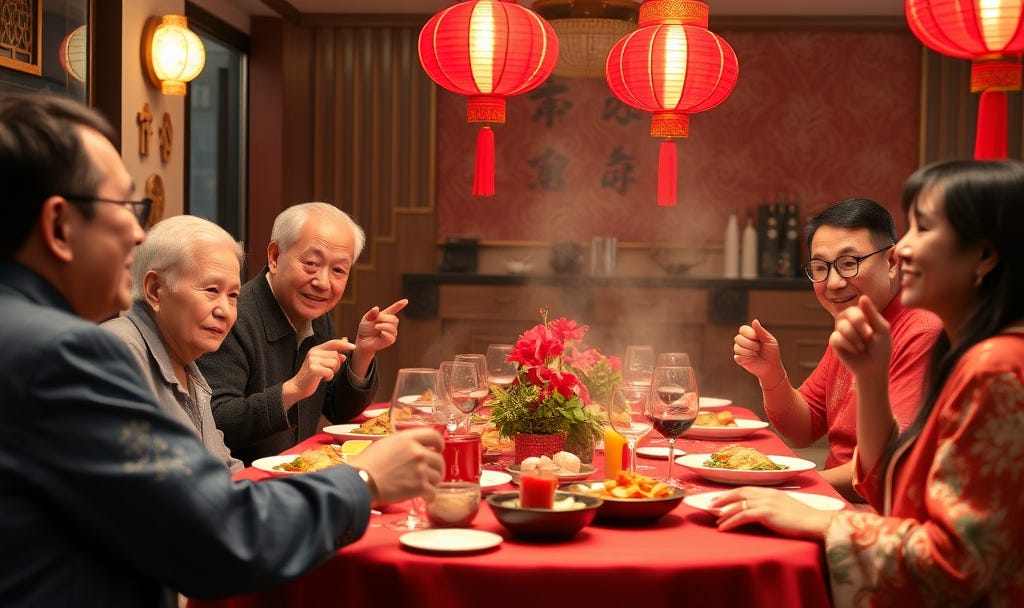
Whenever I say those words, I hear my grandfather’s voice. He was a man who held his family close, and to him, the Sunday table was a sanctuary. Food was never rushed. It was the medium through which we laughed, argued, and reconciled. He would look at the table with a knowing smile and say:
“We do not eat to live. We live to eat.”
As a child, I thought it was just a funny saying. Now, I see it as a way of connecting with others.
In Chinese culture, the dinner table is the center of the home. It’s where respect and harmony come together. We serve our elders first as a quiet thank you for all they’ve done. In return, the table is where stories are shared and passed down.
For me, it became a reminder of belonging:
Of my mother cleaning with intention.
Of cookie tins stacked high.
Of oranges gifted carefully.
My grandmother’s house was filled with noise.
Of red envelopes pressed into my hands.
It is my Chinese Christmas.
But this isn’t just our tradition. Whether it’s a Sunday roast, a Friday Shabbat, or fifteen days of Spring Festival, the table is the world’s oldest way to connect. It’s where we relax and share meals together. Chinese New Year highlights this truth. No matter how fast life gets or how digital we become, we still want to come together in person.
We come back to the table. We come back to our elders. We come back to each other.
The Chef’s Perspective: Why I Write
I cooked in private and professional kitchens for over twenty years before I started writing. I know what it means to work behind the scenes, building something with your hands, your time, and your effort.
I write because I believe that in the food industry, your story helps build trust and shows your true value.
Every dish has a history. Every menu holds memories. Every restaurant has a family, a journey, a belief, and a dream behind it. My goal is to help food businesses turn their hard work into stories that connect with their customers.
Food is never just food. It’s memory. It’s identity. It’s a part of us. When people know the story behind a meal, they see its true value.
If you want your brand to have a chef’s perspective, rooted in culture, craft, and real experience, I’d love to help you share your story.
Kong Hee Fatt Choy.
Happy New Year.
May you gain luck and prosperity throughout the year.